What is the way forward for undruggable tumour targets?
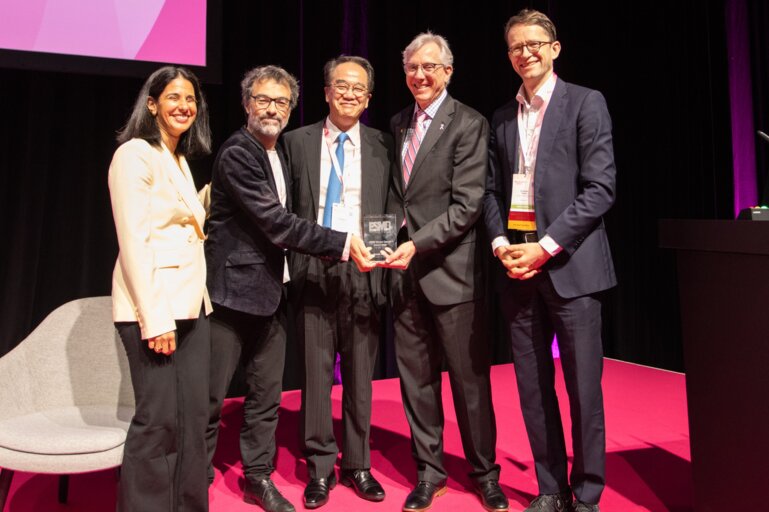
2026 ESMO TAT Honorary Awardee, Prof. Timothy A. Yap, sees a bright future ahead for novel synthetic lethal strategies, driven by advances in technology and novel biomarkers
Recent studies emphasise that the current approach does not fully capture the needs and experiences of patients with rare tumours
From geriatric assessment to artificial intelligence, an ESMO/SIOG paper highlights effective strategies to improve the representation of older patients in clinical trials
Mitigating research biases by rigorous data analysis and validation can pave the way for a wider adoption of artificial intelligence in cancer care
Preclinical findings show antitumour activity of triple KRAS inhibition in mouse models, but it will take years of rigorous research to assess its clinical efficacy in oncology patients
Dose optimisation of immune checkpoint inhibitors may help address current healthcare resource constraints and improve treatment access
Several misconceptions around sex- and gender-sensitive medicine still limit its application in cancer research and care
Integrating DNA and RNA profiling is a promising approach to advance cancer characterisation and guide clinical decision-making
ESMO plays a central role in developing long-lasting recommendations for a safe and effective use of artificial intelligence supporting oncology stakeholders
AI-driven approaches can help to design minibinders, which may bring new T-cell receptor-based therapies closer to the clinic
This site uses cookies. Some of these cookies are essential, while others help us improve your experience by providing insights into how the site is being used.
For more detailed information on the cookies we use, please check our Privacy Policy.
Necessary cookies enable core functionality. The website cannot function properly without these cookies, and you can only disable them by changing your browser preferences.