
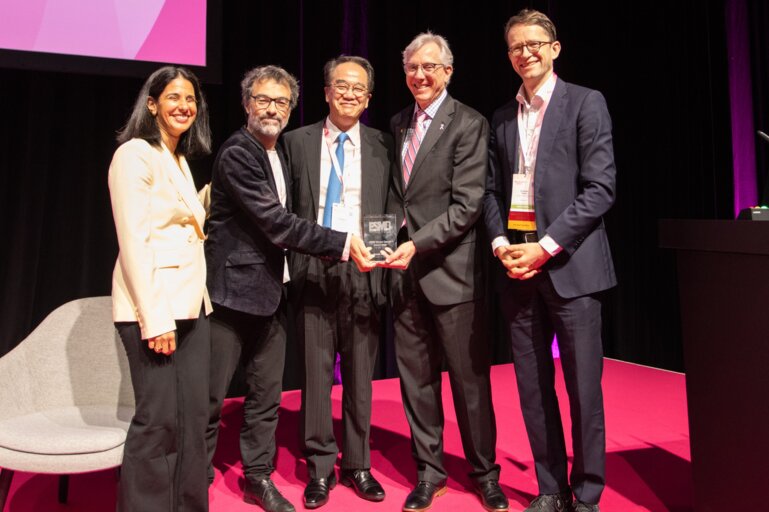
The 2026 ESMO Breast Cancer Awardee, Daniel F. Hayes, reflects on the future of biomarker research in the field
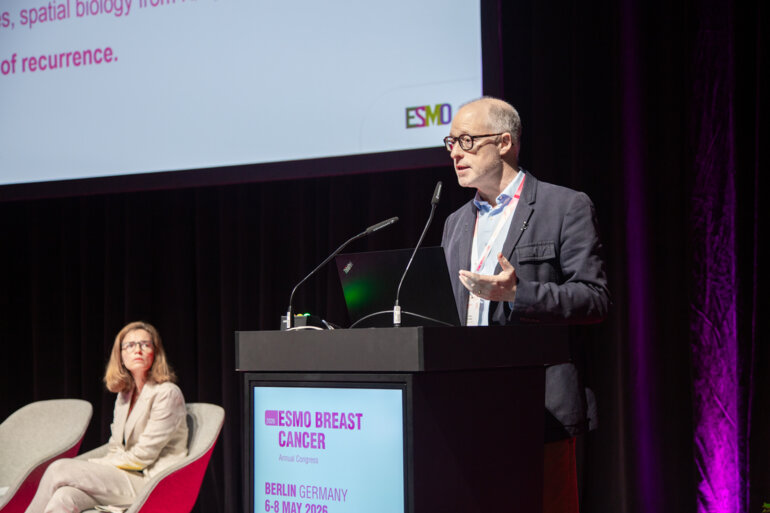
Meaningful answers to important clinical questions should be pursued, regardless of the technology or treatments used – this is the take-home message from Daniel F. Hayes, Stuart B. Padnos Professor of Breast Cancer Research (Active Emeritus) at the University of Michigan Rogel Cancer Center, USA, receiving the 2026 ESMO Breast Cancer Award at the ESMO Breast Cancer 2026 congress (Berlin, 6–8 May). The award was given in recognition for his key role in the development of tumour biomarker tests, as well as his role in helping to establish international guidelines on their use.
During his Award Lecture at the Congress, Hayes reflects on the key moments in the evolving field of tumour biomarker research in breast cancer.
What do you consider to be the greatest turning points in breast cancer biomarker research?
Breast cancers were among the first cancer types to attract attention in terms of tumour-specific therapy and a shift away from the ‘one-size-fits-all’ approach to treatment. This shift first happened with identification of the oestrogen receptor (ER) in the early 1970s by Elwood Jensen, which was quickly followed by William McGuire and others, who demonstrated that patients with ER-negative breast cancer did not benefit from anti-oestrogen (endocrine) therapies.
Over the last decade, the discovery of circulating cell-free tumour DNA (ctDNA) in the blood of patients with breast and other cancers has led to re-identification of the presence of mutations in the ESR1 gene (the gene that encodes for ER) in metastatic breast cancer (MBC) tissue (Nat Genet. 2013;45:1446–1451). These mutations were found in ligand (oestrogen)-independent ER signalling, and this observation supported the idea that oestrogen depletion with aromatase inhibitors (AIs) – one of the most common treatments for ER positive disease – would be ineffective in cancers harbouring these mutations (Clin Cancer Res. 2016;22:993–999).
Other studies have now demonstrated that such potentially actionable mutations can be used to further personalise treatment for patients with ER-positive MBC (Cancer Res. 2018;78:1110–1122). Among these is the phase III SERENA-6 study, in which patients with advanced ER-positive, HER2-negative advanced or MBC on first-line endocrine therapy were monitored for appearance of mutated ESR1. Patients were randomly assigned to switch from oestrogen depletion with an AI to a selective ER downregulator (SERD; camizestrant) plus a CDK4/6 inhibitor, or to continue their oestrogen depletion treatment until the classic signs of progression (N Engl J Med. 2025;393:569–580). In this study, when mutations were detected, switching from an AI to camizestrant resulted in a 56% reduction in the risk of progression or death. Long-term follow-up of this study is ongoing to determine whether these findings translate into an overall survival benefit. If confirmed, the study may shift the paradigm from reactive clinical and radiographic monitoring to molecular-level detection.
Looking to the future, what direction do you think the field will take?
Integrating multiple modalities, such as circulating tumour cells (CTCs), ctDNA and tissue biopsies, will provide a more holistic view of a patient’s disease. So far, liquid biopsy has shown clinical utility to monitor patients with a range of different cancers. However, translational research is moving oncology towards proactive, molecular-driven interventions in which positive findings do not just reflect increased tumour presence or burden but may provide guidance towards the optimal therapeutic strategy. For example, the SWOG S1416 trial showed that ctDNA could be used to detect somatic alterations – specifically homologous recombination repair alterations – linked to the effectiveness of PARP inhibitors in patients with triple-negative breast cancer (J Clin Oncol. 2025;43(Suppl. 16):1012).
Moreover, there is evidence that ctDNA complements CTC rather than replacing it (Int J Mol Sci. 2022;23:7843). Single-cell molecular profiling of archived CTCs can demonstrate remarkable cell-to-cell heterogeneity, with appearance or disappearance of clonogenic subclones within individual patients during treatment. This strategy could help clinicians identify the emergence of resistant clones that could be targeted early and with intelligently-defined combination therapies.
Ultimately, the trajectory of translational research must remain anchored in one goal: to improve patient management. Researchers must continue to ask how their findings can be practically applied to enhance patient care.
What do you consider to be your greatest contribution to the field?
My greatest legacy would be instilling the scientific rigour learnt from basic and clinical research to tumour biomarker studies. Early on, my involvement in translational research made it clear that not all biomarkers and their associated tests have clinical utility. In the 1990s, the American Society of Clinical Oncology (ASCO) assembled a group of experts to develop guidelines for use of tumour biomarker tests in breast and colon cancers. Our first task was to actually work out a framework in which the evidence to develop tumour marker guidelines might be assessed. This led to what we called the ‘Tumor Marker Utility Guidelines System’ (TMUGS). This work served as a basis for the REMARK guidelines for tumour biomarker study reporting, proposed by other colleagues from the U.S. National Cancer Institute and the European Organization for Research and Treatment of cancer (EORTC) (Br J Cancer. 2023;128:443–445). Later, I worked with several colleagues to develop a precise set of criteria to define the clinical utility of tumour biomarker tests. Clinical utility means that clinical decisions guided by a specific tumour biomarker test result are associated with superior outcomes compared with when the test is not considered. These criteria are helpful to assess the levels of evidence available for such tests and they have, to this day, continued to evolve (J Natl Cancer Inst. 2009;101:1446–1452; J Clin Oncol. 2021;39:238–248). This work served as a basis for the REMARK guidelines for tumour biomarker study reporting, proposed by other colleagues from the U.S. National Cancer Institute and the European Organization for Research and Treatment of Cancer (EORTC) (Br J Cancer. 2023;128:443–445).
What were the key moments in your career that led to a profound understanding of where research was heading?
I became involved in the field in the early 1980s when, working with Dr W. Donald Kufe, a prominent molecular pharmacologist, during my fellowship at what is now the Dana-Farber Cancer Institute, despite having no inclination for the subject at the time. We developed an assay to detect and quantify the circulating MUC-1 protein, which was later designated CA15-3, and it is now used worldwide to monitor patients with MBC (J Clin Invest. 1985;75:1671–1678; J Clin Oncol. 1986;4:1542–1550). That work got me interested in tumour biomarkers, especially in those that circulate in blood.
In the early 1990s, I was involved in the development of the first commercially-available, automated detection system for CTC in blood, which further allowed us to monitor patients with MBC. This assay was then approved by the U.S. Food and Drug Administration (Ann Clin Lab Sci. 2013;43:295–304).
A key milestone in breast cancer research was the SWOG S0500 study, which was among the first prospective randomised clinical trials to attempt to use liquid biopsies – specifically CTCs – to guide therapy (J Clin Oncol. 2014;32:3483–3489). In the study, patients with MBC and persistently increased CTC count after one cycle of first-line chemotherapy, suggesting that the chosen therapy was unlikely to work, were randomly either switched to an alternative chemotherapy regimen or to stay on the same treatment until classic clinical or radiographic evidence of progression. The CTC assay efficiently discriminated between patients with no elevated CTC at baseline and good outcomes after first-line chemotherapy, from those with elevated or without a substantial decline in CTC by first follow-up. Switching to a different chemotherapy demonstrated no improvement in overall survival in the latter group so, while CTC count was strongly prognostic, it did not have clinical utility in the absence of more effective therapies. At the time, this negative trial had a somewhat detrimental impact on the field of liquid biopsy and breast cancer research, but it did establish that persisting with the same treatment in some patients was futile. While we attempted to do further studies building on these results, the advent of ctDNA at the time led our investigations in other directions.
Research efforts are ongoing to evaluate the use of novel tumour biomarker tests, particularly liquid biopsies, to improve the personalisation of care for patients with breast and other cancers. These will only be successful if we continue to acknowledge, and pursue, the scientific method in a rigorous fashion, and I am pleased to see that many young investigators in the field are doing so.