
Two studies provide insights into the biological basis of triple-negative breast cancer
Potential novel drivers of chromosome instability and biomarkers of early recurrence were identified

Potential novel drivers of chromosome instability and biomarkers of early recurrence were identified

Multi-regional modelling reveals new ways to personalise treatments in gastric and breast cancers

A manageable safety profile was also reported for pumitamig plus the antibody-drug conjugate DB-1305/BNT325 in an early-phase study

Integrating digital pathology with genomic and clinical data may enhance prediction of late recurrence and refine selection for adjuvant treatment intensification in HR-positive, HER2-negative disease

Patient-reported outcomes show that datopotamab deruxtecan also improved patient functioning and symptom control compared to chemotherapy

The first prospective phase II trials evaluating TOPO1 ADC after prior TOPO1 ADC therapy confirm the emergence of cross-resistance

Gaps still exist in care and communication for AYA, with failure to address their unique needs

Data from two novel studies further support the feasibility of this approach, although its clinical utility has yet to be determined
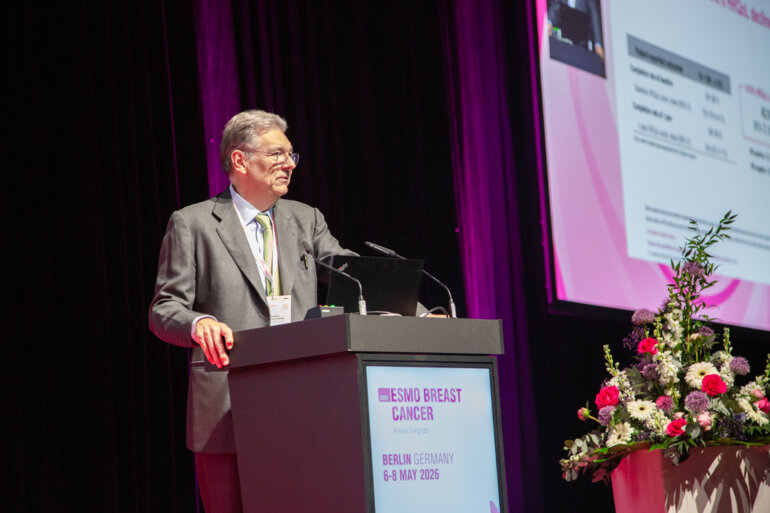
A pathological complete response-guided approach enables treatment optimisation in a selected population with HER2-positive breast cancer in the PHERGain-2 study

Encouraging results with giredestrant support the future use of SERD-based endocrine strategies in this setting
This site uses cookies. Some of these cookies are essential, while others help us improve your experience by providing insights into how the site is being used.
For more detailed information on the cookies we use, please check our Privacy Policy.
Necessary cookies enable core functionality. The website cannot function properly without these cookies, and you can only disable them by changing your browser preferences.