
Rethinking cancer vaccines through the tumour immunopeptidome
Direct identification of specific tumour-derived HLA-bound peptide targets is enabling the development of personalised immunotherapy strategies

Direct identification of specific tumour-derived HLA-bound peptide targets is enabling the development of personalised immunotherapy strategies

New study findings provide support for the use of ctDNA to predict survival benefits and personalise treatments

ADCs are transforming the management of patients with GI cancers, but novel targets and combination strategies will be required to address resistance development and optimise patient outcomes
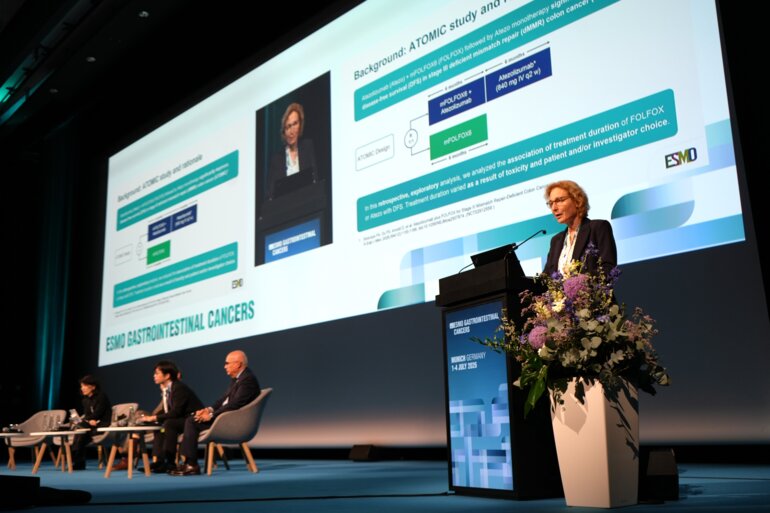
An ATOMIC study pre-planned exploratory analysis reports no DFS benefit with the addition of immunotherapy in patients receiving fewer than six cycles of chemotherapy
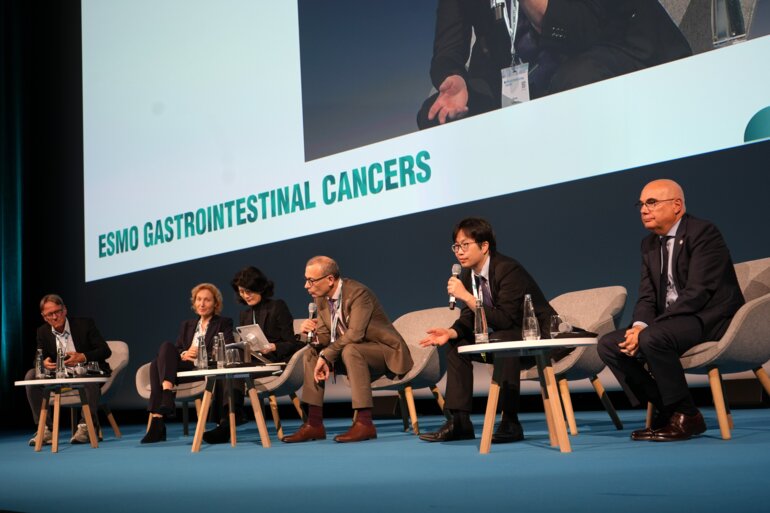
The phase III KRYSTAL-10 trial did not meet its co-primary survival endpoints

Immunotherapy is optimising outcomes in LACC, with durable responses and long-term survival, especially in those with immune activated or ‘hot’ tumours

A manageable safety profile was also reported for pumitamig plus the antibody-drug conjugate DB-1305/BNT325 in an early-phase study

In light of recent evidence from the ATOMIC trial, balancing adjuvant and neoadjuvant immunotherapy approaches continues to challenge clinical decision-making.

The first prospective phase II trials evaluating TOPO1 ADC after prior TOPO1 ADC therapy confirm the emergence of cross-resistance

Encouraging results with giredestrant support the future use of SERD-based endocrine strategies in this setting
This site uses cookies. Some of these cookies are essential, while others help us improve your experience by providing insights into how the site is being used.
For more detailed information on the cookies we use, please check our Privacy Policy.
Necessary cookies enable core functionality. The website cannot function properly without these cookies, and you can only disable them by changing your browser preferences.