

Combining the optimisation of clinical pathways with tumour molecular insights enables more accurate and personalised cancer care
The rapid evolution of personalised clinical algorithms is reshaping the landscape of cancer care. Multimodal strategies combining clinical parameters, molecular hallmarks and radiomics signatures are increasingly converging, laying the foundation for a new era of oncology in which patient management is guided by the ‘tumour identity card’ containing diagnostic, prognostic and predictive data for each person.
In the current genomic era of cancer care, molecular markers have driven significant advances in patient stratification, specifically by enabling the identification of individuals who may benefit from tailored treatments. Consequently, multimodal approaches have substantially improved the clinical management of non-metastatic tumours, facilitating the early detection of pre-cancerous lesions and/or the prediction of disease relapse.
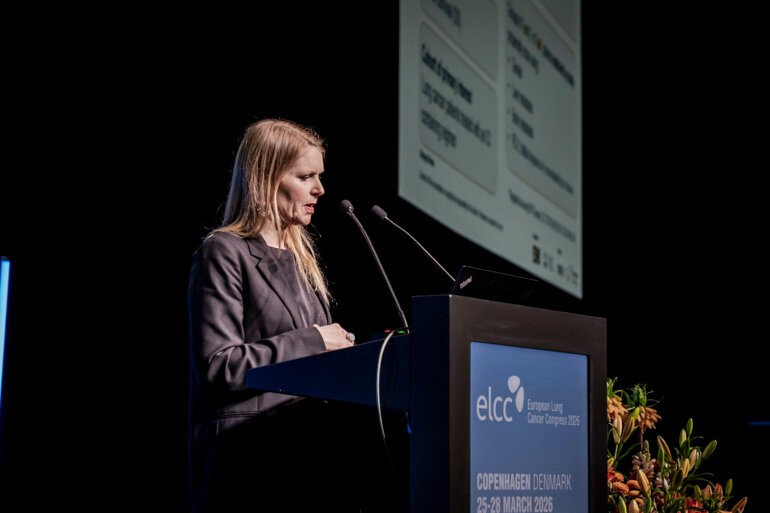
Use of circulating tumour DNA (ctDNA) from peripheral blood – a small fraction of circulating free DNA (cfDNA) – has proven, consistent results for genotyping patients with advanced tumours to identify target therapies. It has been shown that liquid biopsy is a dynamic, less invasive, easy to collect source of nucleic acids, complementing tissue biopsy for the molecular stratification of patients with cancer. At the European Lung Cancer Congress (ELCC) 2026 (Copenhagen, 25–28 March), a poster presentation illustrated a multimodal algorithm integrating ctDNA analysis with low-dose computed tomography (LDCT) for the early detection of cancer in 120 patients with suspicious pulmonary nodules (Abstract 373P). A targeted DNA sequencing panel assay detecting traces of ctDNA in cancer-related genes achieved a sensitivity of 78.5% and specificity of 92.0% in patients with stage I–II non-small cell lung cancer (NSCLC). Not surprisingly, combinatory analysis of genomic pattern and LDCT signature augmented the positive predictive value from 62.0% to 84.0%, which also correlated with clinical data. In fact, persistent ctDNA level correlated with worse prognosis after surgical resection, predicting relapses within 12 months and paving the way for multimodal strategies to optimise clinical management of patients.
However, it is well established that ctDNA analysis only partially captures the biological complexity of tumour lesions and a multiparametric investigation is required to fingerprint the molecular landscape (Br J Cancer. 2021;124:345–358). In this setting, proteome analysis can consistently influence multimodal strategies to predict the risk of cancer progression. In a second study presented in Copenhagen, a series of 2,921 plasma proteins from the UK Biobank were investigated using time-stratified Cox models modulated on locally estimated scatterplot smoothing trajectories to dynamically evaluate their predictive value at diagnosis (Abstract 505P). Of note, statistical models play a key role in multiparametric analysis of patients, harmonising a heterogeneous series of data. Interestingly, 340 risk-associated proteins were detected that correlated with long-term (>5 years pre-diagnosis) or imminent (<5 years) risk, with temporal heterogeneity of these proteins split into four distinct molecular patterns capable of capturing tumour evolution. In particular, a machine learning algorithm integrating a 9-protein signature with clinical data was associated with a consistent predictive value.
Overall, individualising cancer care has become pivotal to disease management. Beyond the integration of molecular profiling in clinical practice, a multimodal approach also encompasses the tailoring of some clinical pathways. In NSCLC, for example, this strategy has already shown tangible clinical benefit, as reported by a positive impact of a fast-track (‘Enhanced Recovery After Surgery’) rehabilitation programme on the stabilisation of post-operative complications in patients after pulmonary resection for lung cancer in a study presented at the Congress (Abstract 254P). Collectively, these findings underscore the need for further comprehensive strategies that combine clinical optimisation with molecular insights, ultimately advancing truly personalised cancer care.
Programme details
ctDNA integration in clinical practice. European Lung Cancer Congress 2026 - Educational Session.
Kadyrbaeva R, et al. Effectiveness of a fast-track (ERAS) rehabilitation program after lung cancer surgery: A prospective randomized study. European Lung Cancer Congress 2026 - Abstract 254P
Huseynzada U, et al. Circulating tumor DNA as a predictive biomarker for early-stage NSCLC. European Lung Cancer Congress 2026 - Abstract 373P
Cheng B, et al. A dynamic proteomic signature for the prediction of incident lung cancer: A longitudinal analysis in the UK biobank cohort. European Lung Cancer Congress 2026 - Abstract 505P