Fostering academic clinical research is one of the ESMO’s priorities, and artificial intelligence may be a major driver
Advances in diagnostic technologies and a deeper understanding of cancer biology have unlocked new opportunities for anticancer therapies in recent years. To sustain momentum, the global cancer community must unite to find strategies to optimise the drug development journey.
Phase I represents a crucial stage along the process: results reported in early clinical trials determine the success or failure of a therapeutic strategy and, ultimately, whether patients with cancer will have access to novel effective treatment options. In light of a growing number of agents developed by biotechnology companies, often with only small differences between them, there is now a strong need to understand their mechanisms of action, to help differentiate promising medicines from those that are less, and to identify reliable biomarkers. It is also at this stage that ESMO proposes determining whether drug development should proceed based on the organ involved or follow a tumour-agnostic approach.
Other critical areas for drug development include the preclinical phase, where careful identification of which drug would deserve more resources and investments occurs, and the phase III, where unnecessary barriers still limit research, including bureaucratic and administrative burden, and policy issues.
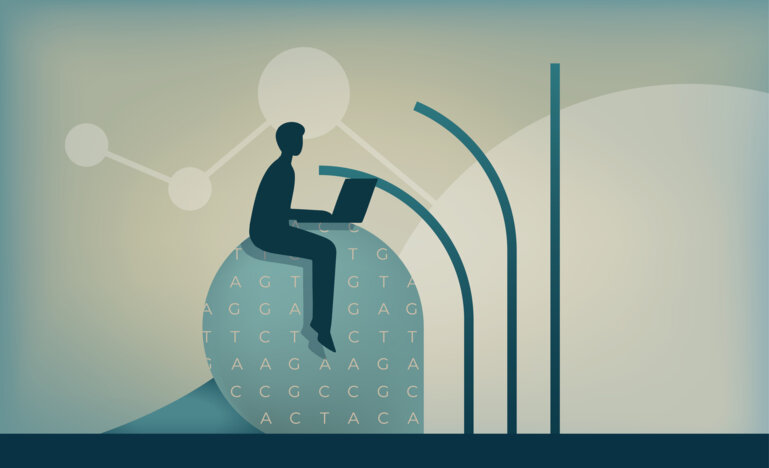
Fostering academic clinical research is one of the ESMO’s priorities, to accelerate development of effective anticancer treatment, and artificial intelligence (AI) can be a major driver. First, it facilitates data capture and data acquisition, improving resource efficiency for each trial and creating a virtuous cycle: AI-driven research can become less expensive, allowing limited academic funding to support a greater number of studies. The second major aspect is that AI itself is a subject of clinical research, and the need for increasingly large datasets to develop and train novel tools and systems will strengthen collaboration and integration among academic centers.
At ESMO, we believe that supporting the development of AI and creating the right framework for its use represents an opportunity to take oncology drug development to the next level. Over the past two years, the ESMO Real World Data and Digital Health Task Force has worked extensively to develop a framework for the use of AI. The first step was to clarify what we mean by AI as this is a relatively new field, and to outline potential uses, limitations, and associated risks of different AI tools in oncology. This work led to the ESMO Guidance on the Use of Large Language Models in Clinical Practice (ELCAP) , a framework for an informed, safe and effective implementation of AI-based solutions into clinical practice. More recently, the group developed the ESMO Basic Requirements for AI-based Biomarkers in Oncology (EBAI) , a conceptual framework and guidance on how to validate and safely use AI-based biomarkers in oncology.
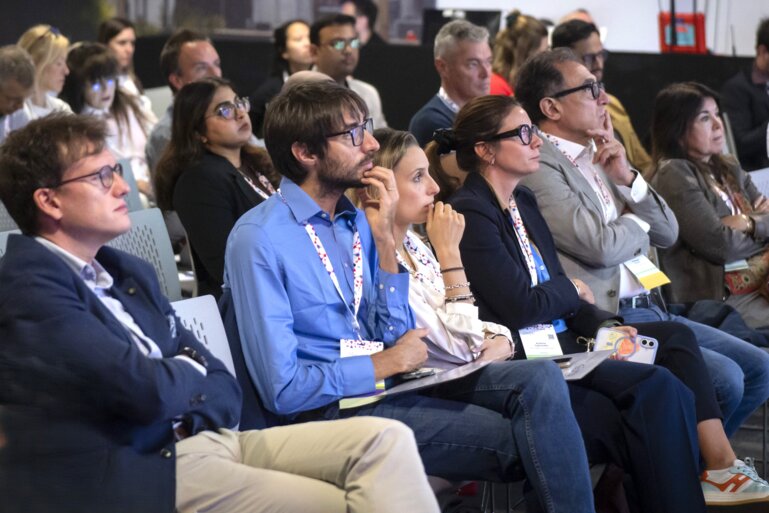
It is becoming clear that the future of cancer drug development will not be defined solely by making better drugs, but also by evolving the research ecosystem through smarter technology-driven approaches, robust infrastructures, and increased education and training opportunities, especially for the next generation of researchers. The ESMO Targeted Anticancer Therapies (TAT) Congress exemplifies this effort: intentionally a small forum, it enables different oncology stakeholders to be actively engaged in discussions and in finding solutions to current challenges.
Importantly, it draws attention to the need to optimise early clinical research: once a strong foundation is established, the subsequent stages of drug development become far more efficient.