
2025 ESMO Immuno-Oncology Awardee, Ignacio Melero, is confident that combinations and novel multispecific agents will result in synergistic strategies to ensure the continued success of cancer immunotherapy
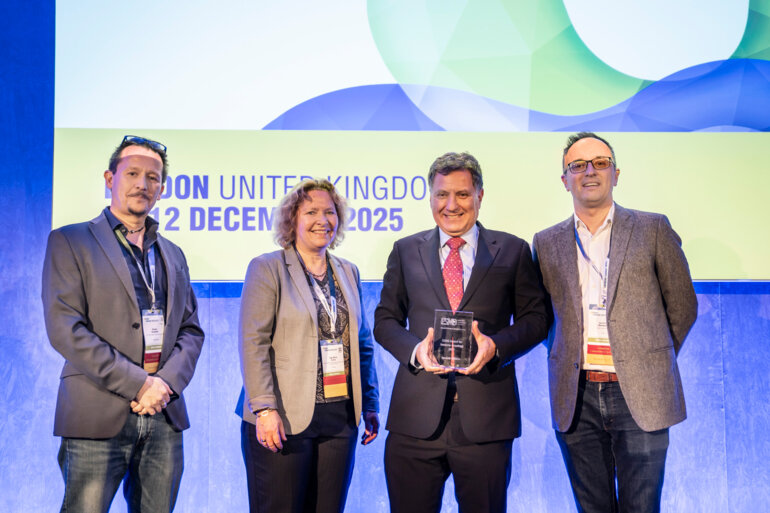
Prof. Ignacio Melero from Universidad de Navarra, Pamplona, Spain and the University of Oxford, UK, received the 2025 ESMO Award for Immuno-Oncology during the Opening Session of the ESMO Immuno-Oncology Congress 2025 (London, 10–12 December) for his groundbreaking research in cancer immunology and immunotherapy, having an expert foot in both preclinical and clinical research camps.
Your Keynote lecture reflects efforts over the years to improve immunotherapy by exploring synergistic approaches. What are the most promising approaches in the field?
Agonist antibodies directed towards the receptor 4-1BB (CD137) press the gas pedal of the antitumour immune response and my lecture focuses on attempts made to maximise antitumour activity while mitigating side effects. The main goal is to tamper with the hostile mechanism of the tumour microenvironment (TME), while avoiding unwanted inflammation (Cancer Discov. 2023;13:552–569). Moving forward, soluble actionable inflammatory substances that mediate resistance to immunotherapy, including the tumour-derived cytokine growth differentiation factor 15 (GDF-15) that disrupts cellular antitumour immune response mechanisms (Nature. 2025;637:1218–1227), are attracting a great deal of interest. Combinations of anti-GDF-15 and anti-PD-1 agents represent a very promising avenue of research according to data at the ESMO Congress 2025, which reported the durable activity of the GDF-15 neutralising antibody, visugromab, in combination with nivolumab in patients with PD-1-/PD-L1-refractory non-small cell lung cancer, urothelial cancer and hepatocellular carcinoma (HCC) (Ann Oncol. 2025;36(Suppl 2):S907–S908), as well as very encouraging activity in muscle-invasive bladder cancer (Ann Oncol. 2025;36(Suppl 2):S1766–S1767).
What do you consider to be your greatest achievements in the field of immunotherapy?
The research I am most recognised for is the exploitation of 4-1BB to elicit tumour rejection – research that began over 25 years ago (Nat Med. 1997;3:682–685). Despite early problems of liver toxicity with 4-1BB-targeted treatments, over a dozen 4-1BB agonists are in clinical trials. In the area of HCC immunotherapy, the CheckMate-040 trial offered proof-of concept that checkpoint inhibition with anti-PD-1 agents was therapeutically active, showing activity with nivolumab monotherapy (Lancet. 2017;389:2492–2502) and, later, with the combination of nivolumab plus ipilimumab, which eventually became the most active regimen for advanced HCC (Ann Oncol. 2024;35:537–548).
The effective delivery of immunotherapy is crucial to success and, since the early days of gene therapy, we have also been exploring options for intratumoural administration, including the use of interleukin (IL)-12 gene therapy. The recent phase II trial of intratumoural toll-like receptor 3, BO-112 – a synthetic RNA–polyethylenimine agent that reverses anti-PD-1 tumour resistance – in combination with pembrolizumab showed promising durable responses in anti-PD-1-resistant advanced melanoma (J Clin Oncol. 2025;43:2806–2815).
Another area of our research concerns conventional type-1 dendritic cells (cDC1), which are central to the presentation of tumour antigens and are necessary for cytotoxic T-cell activation, the critical component of probably every effective cancer immunotherapy response. cDC1 density appears to be a strong predictive biomarker for immunotherapy and our preclinical work has been looking into ways to enhance the number and function of these cells.
Finally, chemokines, like IL-8, attract tumour-suppressing neutrophils to the TME but can also stimulate a form of neutrophil death (netosis), leading to the extrusion of neutrophil extracellular traps (NETs) that exert immunosuppression and so reduce the beneficial effect of immunotherapy (Immunity. 2020;52:856–871.e8). We are now investigating the repurposing of antigens developed in other areas of medicine, like rheumatology, to address these unwanted forms of pro-tumour inflammation.
What direction do you think the field of immunotherapy is going to take?
At the moment, immunotherapy is in a bit of a trough. The first wave was hugely successful, forever transforming the treatment and maintenance of a broad variety of tumour types. However, the recent failures of combination regimens and novel agents, some at a late stage of development, has created an impression among some, including investors and the industry, that immunotherapy is already passing its peak. I strongly disagree – immunotherapy is very much alive. And the key word to continued success is ‘synergy’. Rational deployment of effective combinations, for example with antibody–drug conjugates or small-molecule Ras inhibitors, will be informed by research further revealing the pathways involved in immune reactions. Multispecific agents, such as those targeting PD-(L)1 and VEGF hold impressive promise. My vision is that, while the era of quantum leaps may have passed, the next 10 years will see steady and meaningful increases in the clinical benefit immunotherapy can offer our patients.
Programme details:
Melero I. Combining immunotherapies in a quest for synergies. ESMO Immuno-Oncology 2025 Award Keynote lecture