Overcoming resistance to immunotherapy in NSCLC?
Understanding the evolution of immunotherapy resistance holds the key to developing novel strategies in NSCLC
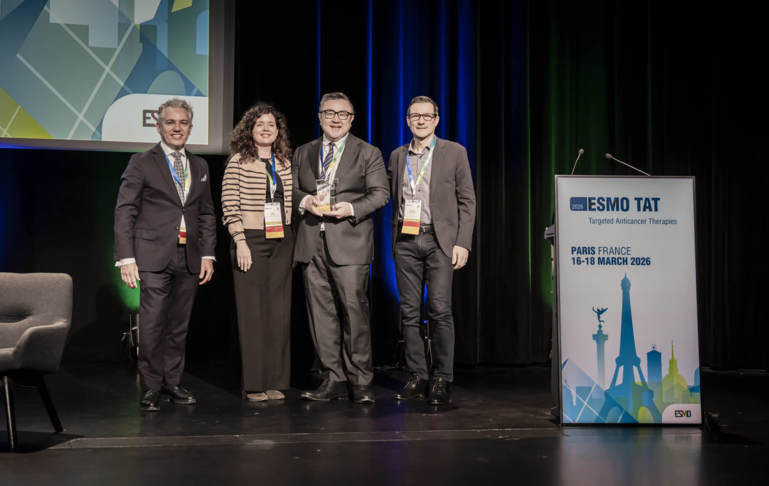
2026 ESMO TAT Honorary Awardee, Prof. Timothy A. Yap, sees a bright future ahead for novel synthetic lethal strategies, driven by advances in technology and novel biomarkers
Can artificial intelligence finally unlock the full potential of cancer genomics? Discover how new digital tools are closing the gap between data and clinical action in oncology.
Presidential Symposium presentation provides insights into the role of 177Lu-PSMA-617 in the treatment of hormone-sensitive prostate cancer, with results also presented in castration-resistant disease
Growing evidence shows that AI models can predict a patient's disease trajectory and signal the need for early therapeutic intervention
Global cooperation is needed to improve trial design and expedite new treatments specifically in low- and middle-income countries
Findings from studies show that patient-centred evidence can inform decisions in early-phase cancer research
The 2025 ESMO Breast Cancer Awardee highlights that participation in clinical trials and the contribution of patient advocates is as relevant as technology to progress cancer care further
Researchers’ confidence is growing, but the quality of the data generated may still represent a challenge
Agents targeting B7-H3 and CEACAM6 pass their initial clinical tests, according to results from first-in-human trials
This site uses cookies. Some of these cookies are essential, while others help us improve your experience by providing insights into how the site is being used.
For more detailed information on the cookies we use, please check our Privacy Policy.
Necessary cookies enable core functionality. The website cannot function properly without these cookies, and you can only disable them by changing your browser preferences.