
Immunotherapy in dMMR/MSI-H endometrial cancer – a true game-changer?
Long-term dostarlimab data suggest that immunotherapy may be used with curative intent in this difficult-to-treat population

Long-term dostarlimab data suggest that immunotherapy may be used with curative intent in this difficult-to-treat population

Additional treatment targets and potentially repurposable agents were identified based on chemoradiotherapy response, which could now be explored for further validation.
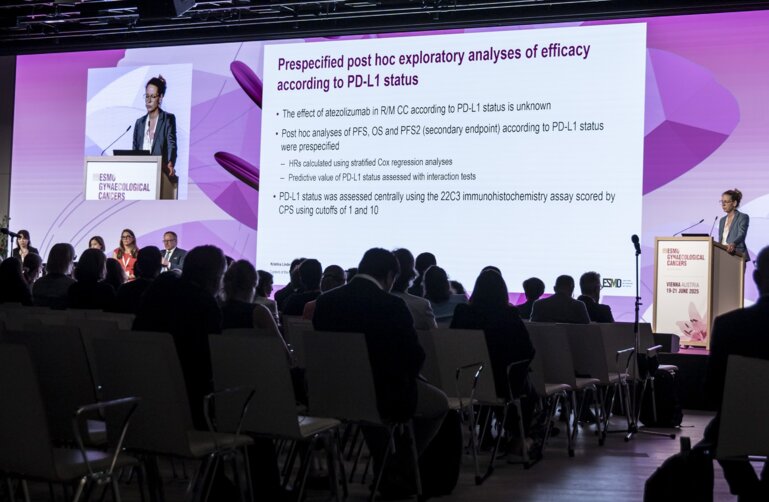
An analysis of the BEATcc trial showed that PD-L1 is not a robust biomarker for response to treatment

Findings are from an exploratory subgroup analysis of the KEYNOTE-826

New study findings support this treatment strategy as a new standard of care for patients with high-risk, locally advanced cervical cancer

Improvements in the understanding of molecular mechanisms, together with a greater focus on prevention, are key elements to countering gynaecological malignancies

However, studies highlight cost as an obstacle to widespread accessibility in some countries

The phase II part of the ROCSAN trial failed to meet its primary endpoint but there may be potential for benefit based on efficacy and safety data with the combination

Promising data are reported for tumours with dMMR, MSI-H and rare POLE alterations, reinforcing the role of molecular testing for tissue-agnostic treatment

Results from the BEATcc study strongly support the use of first-line combination therapy for R/M CC in all patients
This site uses cookies. Some of these cookies are essential, while others help us improve your experience by providing insights into how the site is being used.
For more detailed information on the cookies we use, please check our Privacy Policy.
Necessary cookies enable core functionality. The website cannot function properly without these cookies, and you can only disable them by changing your browser preferences.