
A tribute from one of his former mentees, now a senior oncologist, on the occasion of the 2026 Heine H. Hansen Award presented to de Marinis

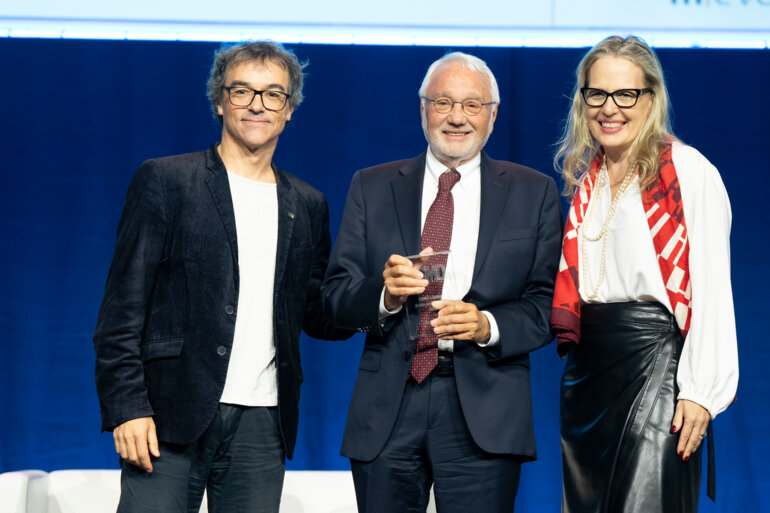
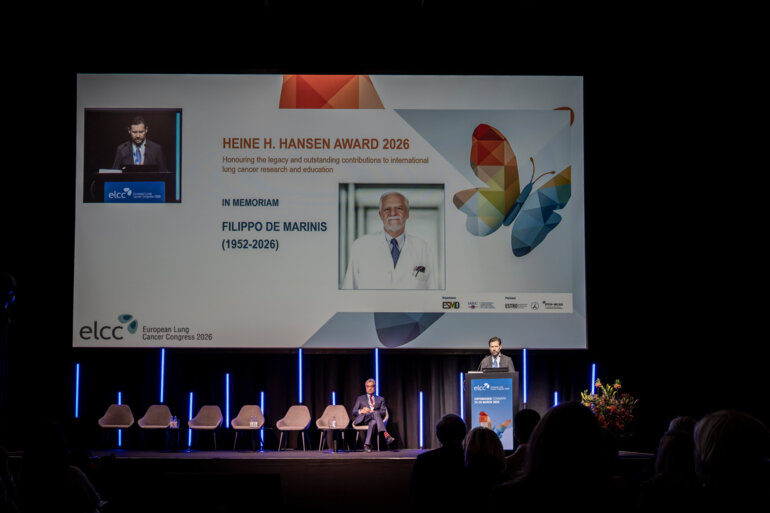
Some of the most enduring contributions of great physicians extend far beyond scientific achievements: they reside in the ideas they transmit, the communities they build and the generations of clinicians they inspire. This is particularly true for Prof. Filippo de Marinis, a leading figure in thoracic oncology, who sadly passed away in February 2026. For his remarkable contribution to the development of new therapeutic strategies in lung cancer that have shaped current standards of care, he was honoured with the 2026 Heine H. Hansen Award.
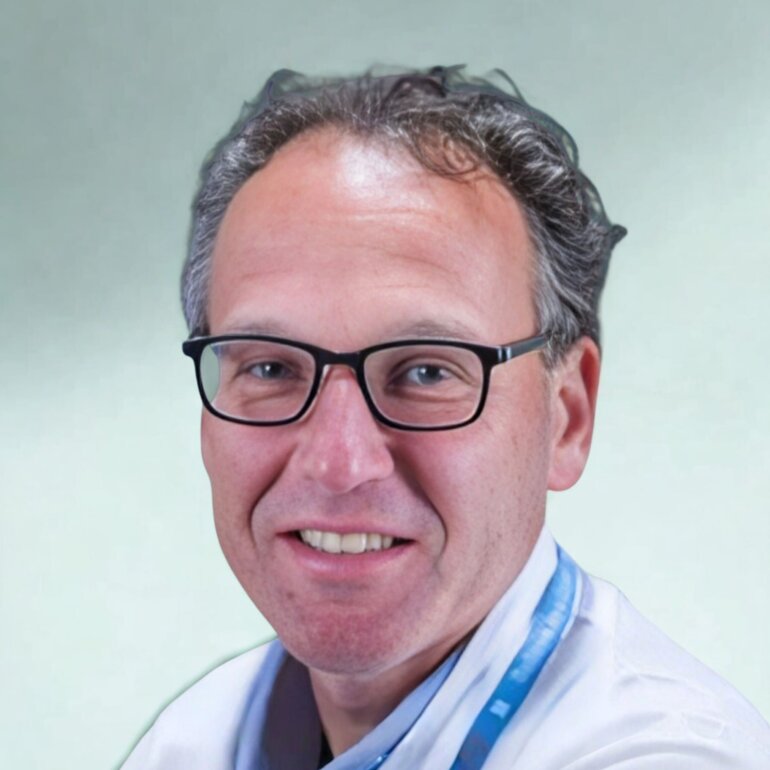
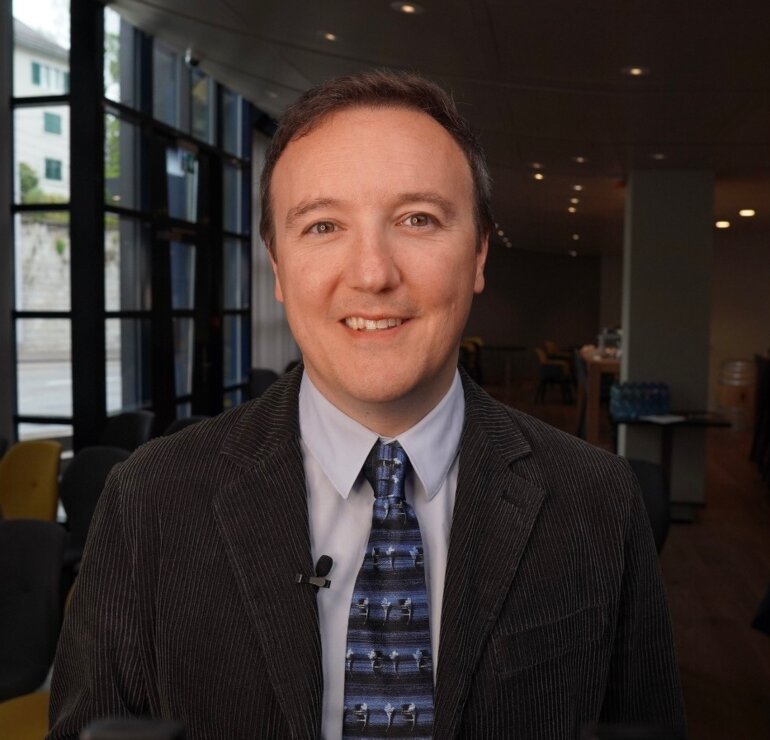
Having worked closely with him for many years at the European Institute of Oncology (IEO) in Milan, Italy, at the European Lung Cancer Congress (ELCC) 2026 (Copenhagen, 25–28 March), Dr Antonio Passaro offers a personal tribute to a mentor, a visionary, and a friend whose lessons will continue to resonate across the oncology community.
What do you consider to be Prof. de Marinis’ greatest scientific achievements?
He was a central figure in the modern history of thoracic oncology. What made his contribution unique was not only the number of studies in which he participated, but also his remarkable ability to anticipate the direction in which the field was evolving. He had an extraordinary vision of how lung cancer treatment would change over time, and he consistently positioned himself and his teams at the forefront of that transformation. Over more than three decades, he was involved in many of the pivotal clinical trials that reshaped the management of non-small cell lung cancer (NSCLC). In the era when chemotherapy still dominated treatment strategies, studies such as PARAMOUNT helped redefine the concept of maintenance therapy, demonstrating that continuing treatment with pemetrexed after induction chemotherapy could prolong disease control and survival in patients with non-squamous disease (Lancet Oncol. 2012;13:247–255). That work represented an important step towards a more dynamic and longitudinal approach to treatment rather than the traditional fixed cycles of chemotherapy.
When the biological complexity of lung cancer began to emerge, de Marinis was among the clinicians who strongly embraced the importance of molecular characterisation. Trials such as EURTAC helped establish EGFR inhibition as a transformative therapeutic strategy, clearly demonstrating that identifying the oncogenic driver of a tumour could radically change patient outcomes (Lancet Oncol. 2012;13:239–246). Those studies marked the beginning of a profound conceptual shift: lung cancer was no longer viewed as a single disease, but as a collection of biologically distinct entities requiring tailored therapeutic approaches. This vision continued through the next generation of targeted therapies. CROWN and ALINA trials exemplify how the treatment of ALK-rearranged lung cancer has improved progressively through increasingly potent and brain-penetrant inhibitors, moving effective targeted agents to earlier in the disease trajectory and dramatically improving long-term disease control (N Engl J Med. 2020;383:2018–2029 ; N Engl J Med. 2024;390:1265–1276).
More recently, de Marinis contributed to studies that represented the latest evolution of precision oncology. Among them, ADAURA demonstrated that targeted therapies could also transform outcomes in the adjuvant setting, fundamentally redefining the management of early-stage EGFR-mutant lung cancer (N Engl J Med. 2020;383:1711–1723). Similarly, MARIPOSA explored innovative strategies to optimise EGFR-targeted treatment and address resistance mechanisms, reflecting the growing sophistication with which the biology of this disease is now understood and treated (N Engl J Med. 2024;391:1486–1498).
These are only a few of the milestones that de Marinis achieved in a long scientific career during which he authored more than 400 indexed publications.
In what other ways did Prof. de Marinis contribute to the oncology community?
I believe his most enduring contribution is the culture he promoted and nurtured in oncology. De Marinis developed and transmitted a mindset grounded in curiosity, rigour and openness to innovation.
As founder of the Italian Association of Thoracic Oncology (AIOT), an initiative that played a crucial role in bringing together clinicians, researchers and multidisciplinary specialists dedicated to lung cancer in the country, de Marinis also helped build a national community focused on advancing research, improving education and promoting collaboration among centres dedicated to the treatment of thoracic malignancies.
Long before education and open dialogue became central aspects in our profession, de Marinis understood that progress in thoracic oncology required investment in communication, collaboration and continuous learning. He trained and inspired dozens of young oncologists who today care for patients and lead clinical programmes in Italy and elsewhere. His teaching style was direct, sometimes provocative, but always aimed at stimulating reflection and professional growth. He was able to transmit a distinct way of thinking about cancer, research and our responsibilities towards patients and colleagues. He constantly encouraged younger physicians to challenge existing paradigms, to think critically about clinical data and to remain intellectually curious.
He had the rare ability to look deeply into complex clinical problems while also keeping his eyes firmly on the future of the field. For many of us, his greatest legacy lies not only in the studies he conducted, but in the generation of oncologists he helped shape and the intellectual spirit he instilled in the community.
Are there any special lessons that he taught you?
I had the privilege of working alongside de Marinis for more than 13 years, and during that time our relationship naturally evolved far beyond a traditional professional collaboration. He was, at different moments, a mentor, a guide, a demanding boss, a trusted colleague, and very often a friend.
One of the most important principles he instilled in me was that improvement begins with honesty towards oneself. He believed that every challenge, every setback, and every error should be used as an opportunity to evolve, first as a person and only then as a doctor. For him, professional growth could never be separated from human growth. Above all, he constantly reminded us of a simple but powerful truth: in oncology we treat people before we treat patients. Behind every scan, every protocol, every clinical decision there is a human being whose life has suddenly changed, and de Marinis never allowed anyone in his team to forget this responsibility.
Since his passing, I often think about one episode that occurred in 2014. We were driving back to Rome after a long day’s work, and we were caught in an intense storm. The rain was so heavy that the road ahead was barely visible. We drove slowly, almost in silence, waiting for the storm to pass. After a while the rain began to fade and the sky started to open. Suddenly, in front of us, two rainbows appeared together across the horizon – an extraordinary sight. Looking at them, he said that nature teaches us an essential lesson: no matter how violent the storm may be, we must never give up.
That sentence may sound simple, but it captured perfectly the way he approached life and medicine: he faced challenges with determination, curiosity and an almost stubborn optimism about the future. That mindset shaped not only the way of practising oncology for those who worked with him, but also how we navigate the inevitable difficulties of our profession – and of life itself. In the end, the most powerful lesson he left us is that scientific excellence and human resilience must always go hand in hand.