
AI for early-phase clinical trials: from hype to proof of concept
Growing experience suggests that artificial intelligence could potentially transform how cancer research is designed and conducted

Growing experience suggests that artificial intelligence could potentially transform how cancer research is designed and conducted

Real-world findings show moderate-to-high concordance between AI-generated and human experts decisions
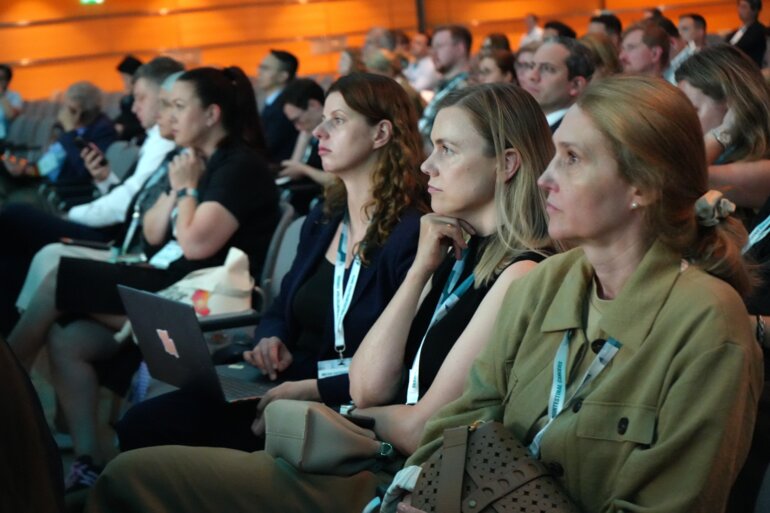
Experts' discussions during the ESMO Gastrointestinal Cancers Congress 2026 explored how AI is moving beyond image recognition to support surgery, pathology and image-guided intervention.

Every day, clinicians generate thousands of reports containing critical data that will never be analysed. Not because it lacks value — but because extracting it remains a bottleneck.

Multi-regional modelling reveals new ways to personalise treatments in gastric and breast cancers

Artificial intelligence is enabling a new class of biomarkers by integrating histology, molecular data, imaging, and clinical records to generate scalable, biologically grounded insights for precision oncology.

Integrating digital pathology with genomic and clinical data may enhance prediction of late recurrence and refine selection for adjuvant treatment intensification in HR-positive, HER2-negative disease

A pilot study reports high levels of acceptance and compliance despite an older patient population

AI-powered trial matching helps identify relevant trials faster, but recruitment often fails beyond the algorithm. Limited cross-site trial discovery, outdated recruitment information and fragmented referral pathways continue to prevent potentially eligible patients from participating in relevant trials.

Early findings suggest potential benefits in symptom monitoring, but highlight usability challenges and added burden on clinical workflows
This site uses cookies. Some of these cookies are essential, while others help us improve your experience by providing insights into how the site is being used.
For more detailed information on the cookies we use, please check our Privacy Policy.
Necessary cookies enable core functionality. The website cannot function properly without these cookies, and you can only disable them by changing your browser preferences.